


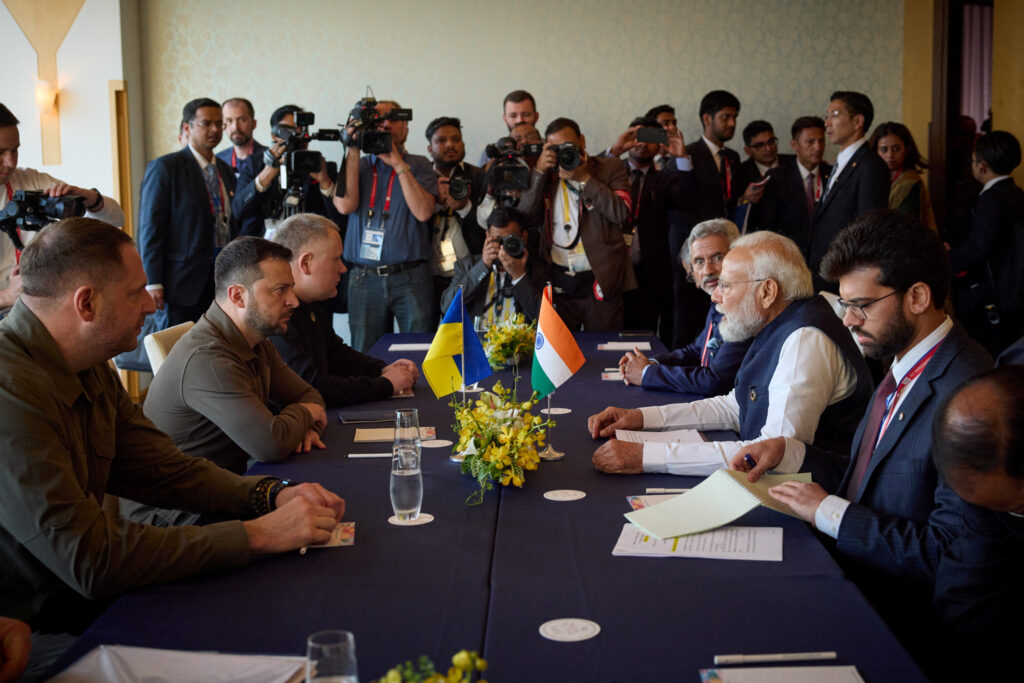
Indian Prime Minister Narendra Modi has arrived in Kyiv, marking a historic visit as the first Indian leader to visit Ukraine since its independence in 1991. Modi’s visit aims to strengthen economic ties, defense cooperation, and scientific collaboration with Ukraine. However, the trip also carries a delicate diplomatic mission – to facilitate a settlement to end the ongoing war with Russia.
Modi’s stance on the conflict has been cautious, emphasizing the need for dialogue and diplomacy to restore peace and stability. His visit comes after a meeting with Russian President Vladimir Putin in Moscow, where they agreed to increase bilateral trade and investments. This has raised concerns about India’s ability to maintain a balanced relationship with both Russia and the West.
India’s position as the world’s largest buyer of Russian arms and its reliance on Russian oil make it a crucial player in the geopolitical landscape. Modi’s visit to Kyiv is seen as an attempt to put himself forward as a mediator, but his success is uncertain.
ALSO READ: Israel Economy Feels the Pinch as Gaza Conflict Drags On
The visit takes place at a critical juncture in the war, with Ukrainian forces making gains in the Kursk region and Russia continuing its advances in eastern Ukraine. India has avoided condemning Russia’s invasion and has instead urged direct dialogue between the two sides.
Ukrainian officials believe Modi’s visit can help push Russia towards talks, given India’s influence over Moscow. However, analysts expect no breakthrough proposals to end the war during Modi’s trip, citing the need for a stable military situation and the upcoming US presidential election.
The visit is significant for India to demonstrate its neutrality in the conflict and for Ukraine to normalize relations after Narendra Modi Moscow trip. As the situation unfolds, Modi’s ability to navigate the complex geopolitical landscape and facilitate a peaceful resolution remains to be seen.