





















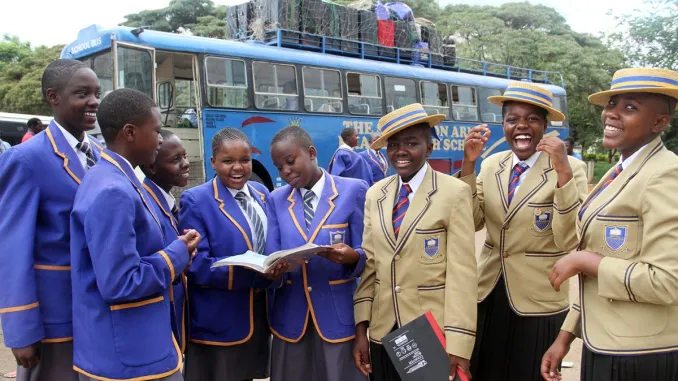
El Niño-induced drought has brought a new worry for Precious Kandori, whose main care has always been paying for her kids’ school uniforms and other necessities: food.
Her kids used to get fed at school, but these days they don’t. As they get ready to go back to school, Precious Kandori is having trouble. She is unsure of how she will make ends meet because of how severely the drought has impacted and how scarce money has become. Even though she performs a variety of odd jobs, like housecleaning, she struggles to visualise her future.
Schools in Zimbabwe are struggling with severe food shortages. Because of the severe consequences of the drought, most schools do not have active feeding programmes, according to a recent survey.
ALSO READ: Local Schools Rejects New Currency Zimbabwe Gold (ZiG)
Notwithstanding these obstacles, Kandori is unwavering in her resolve to send her kids to school because she thinks it would be essential to their success in the future.
Students like Tadiwanashe Nyarumwe, who are dedicated to continuing their studies for a better future while experiencing food insecurity, share her feelings.
However, establishing feeding programmes in schools is significantly hampered by a lack of funding. There are just too many schools without the resources to feed their pupils.
The Home-Grown Feeding Programme (HGSFP), according to the government, is encouraging communities to grow food for school lunches in order to alleviate this problem. Critics counter that a shortage of funding is impeding the program’s effectiveness.
Millions of Zimbabweans are experiencing insecurity as a result of the drought’s worsening effects on food security. Thousands of underprivileged children are receiving meals from independent organisations that are stepping up to help.


