






















Takunda to advance food security nutrition and income.
Today, CARE International officially began implementing the Takunda program-related activities through its cooperation with the Food, Agriculture, and Natural Resources Analysis Network (FANRPAN), in coordination with the Agriculture Research Council (ARC), the Zimbabwe Country Node Hosting Institution.
Takunda is to advance the security of food, nutrition, and income for the extremely poor, the chronically vulnerable, and those at danger of malnutrition.
Masvingo (Chivi and Zaka districts) and Manicaland (Mutare and Buhera districts) are the two provinces where the program is being implemented.
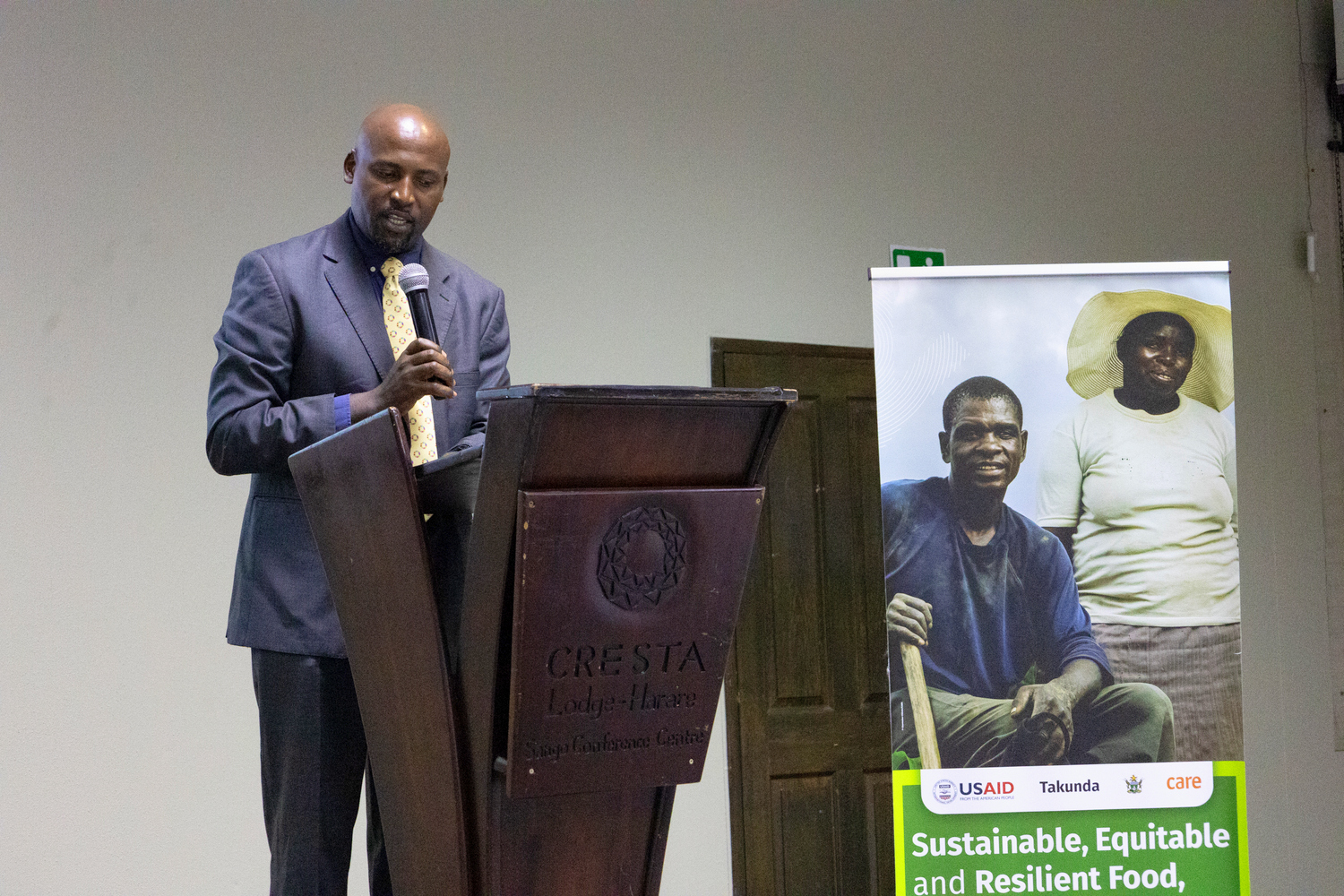
In her introductory remarks, Dr. Unesu H. Ushewokunze-Obatolu, Chairperson of ARC, underlined the value of partnerships aimed at bringing about positive change, particularly initiatives that complemented already-existing government programs.
“I am excited to see that the government being represented at very senior levels. This shows that the issues that the Takunda program is dealing with, are important to our policymakers,” she said.
The Takunda initiative, which is a five-year Resilience Food Security Activity program sponsored by USAID, is being carried out by CARE International in collaboration with partners such as the Bulawayo Projects Centre, Environment Africa, FHI360, and International Crops Research Institute for the Semi-Arid Tropics (ICRISAT) (NAZ) and Nutrition Action Zimbabwe, International Youth Foundation.
In Africa and most other places of the world, climate change is ruining agricultural production. Due to crop failures and losses brought on by rising temperatures, which are becoming more irregular, more than $45 billion in production is in jeopardy, and survival is in danger from floods, recurring weather extremes, and pest outbreaks.
The Intergovernmental Panel on Climate Change (IPCC) and scientific reports highlight the internationally terrible yet worsening effects of this change (such as food shortages, natural disasters, fatalities, wars, and stagnant economic growth). The need for governments in Africa to work together and plan a path of local climate action is based on the fact that farmers and agricultural enterprises’ capacity for adaptation is still limited in the midst of this global crisis.


