


















Itai Mazire
As Zimbabwe tomorrow celebrates its 46th Independence Anniversary under the theme “Zim@46-Unity and Development Towards Vision 2030,” the Zimbabwe Liberated Girl Child in Action (ZLGCA) has reaffirmed its commitment to empowering the girl child as a cornerstone of the nation’s development agenda.
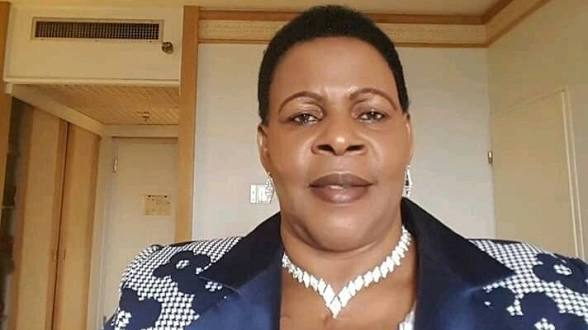
Speaking ahead of the historic commemorations set to take place at Maphisa Stadium in Matobo District, ZLGCA executive director Mrs Anna Mabhena outlined the organisation’s ambitious vision for 2026, declaring that no nation can develop if half its population is left behind.
“Our target is crystal clear, to reach 10 000 beneficiaries with road traffic safety and provisional licence training in 2026.
We believe this will inspire more and more girls to contribute to the national driving skills set,” said Mrs Mabhena, unveiling a nationwide free driving programme for all girls countrywide.
The organisation, which boasts a membership of approximately 2 000 people comprising children of war veterans, has made significant strides in reaching out to vulnerable girls and women across the country.
In a major push to advance gender equality and national development, ZLGCA has launched a free driving programme targeting 10 000 girls nationwide this year, directly tackling unemployment and social challenges while fast-tracking skills development in line with President Emmerson Mnangagwa’s Vision 2030.
Mrs Mabhena drew a direct connection between the organisation’s work and the country’s long-term development blueprint.
“ZLGCA is inspired by Vision 2030 and therefore aims to reach at least 50 000 girls nationwide by 2030,” she said, adding that impact reviews would guide the ongoing strategy.
“No nation can develop if 52 percent of its population is left on the sidelines. Today, we are putting wheels on the President’s vision,” Mrs Mabhena said emphatically.
The national rollout is designed to be inclusive, with all 10 provinces set to benefit. Masvingo Province will be the next stop after Bulawayo.
The driving initiative is part of a broader, holistic empowerment programme for the girl child.
“For the year 2026, ZLGCA will continue to roll out practical livelihood skills training in areas such as agriculture, mining, ICTs and many others. Additionally, life-skills training will be provided in financial literacy, emotional intelligence, first aid, business skills and goal setting,” she said.
Mrs Mabhena linked the skills training directly to combating social ills.
“The two key factors drawing girls into substance abuse and early marriages are idleness and poverty. Provisional licence training provides girls with opportunities for gainful employment, potentially addressing these challenges.
“We plan to expand our projects meant to empower women and girls in order to ensure that no one is left behind. Our goal is to support vulnerable women, including those who are abused and those on drugs,” Mrs Mabhena said, indicating the organisation’s unwavering commitment to the principles of the Second Republic.
The 46th Independence commemorations, being held in Maphisa for the first time, mark a profound homecoming to a region that breathes the history of the liberation struggle.
The choice of venue is a bold statement in the Second Republic’s decentralisation agenda, bringing the flagship national celebration to the heart of Matabeleland South and living true to the philosophy of “leaving no one and no place behind”.
For Mrs Mabhena and the young women of ZLGCA, many of whom are children of war veterans-the link between the liberation struggle and today’s empowerment drive is deeply personal.
She described the commemoration as a tribute to the peace and unity fought for during the liberation struggle.
“The girls felt the need to be responsible citizens, propagating the principles that underline the mandate of the war of liberation which our parents fought for.
“In everything that we are doing, we are trying our best to help our communities. One way we are appreciating the war of liberation and the sacrifices which our parents made is by donating to the less fortunate, visiting those in jails and also assisting patients in hospitals,” she said.
Since gaining Independence in 1980, Zimbabwe has made remarkable strides across multiple sectors.
The country’s education system became one of Africa’s most robust, with literacy rates surging from 45 percent in 1980 to an impressive 92 percent by 1995. Primary school enrolment doubled between 1980 and 1990, while secondary school enrolment increased seven-fold, demonstrating the new nation’s commitment to human capital investment.
In agriculture, Zimbabwe has surpassed its initial agricultural target of USD 8 billion, now set at USD 13.75 billion.
The nation has emerged as the largest tobacco producer on the continent and ranks sixth globally, trailing only agricultural powerhouses like China and India. The fast-track land reform programme, which President Mnangagwa has declared “irreversible,” has empowered local farmers and rectified historical injustices, enabling black farmers, especially smallholders, to boost production and productivity.
The mining sector has emerged as a key economic driver, contributing 13 percent to GDP in 2024, up from 8 percent in 2010. Infrastructure projects completed under NDS1 include the Robert Gabriel Mugabe International Airport Expansion and the Hwange Units 7 and 8, which added 700 megawatts to the national grid.
The National Development Strategy 2 (NDS2: 2026-2030), the final medium-term plan before Vision 2030, seeks to consolidate achievements recorded under NDS1 and accelerate Zimbabwe’s journey toward becoming an upper-middle-income society.
The strategy prioritises industrialisation, modernisation, value addition and beneficiation, predominantly of agriculture and mineral commodities.
For Mrs Mabhena, the alignment between ZLGCA’s grassroots empowerment work and the national vision is unmistakable.
“Our goal is to support vulnerable women, including those who are abused and those on drugs. We plan to expand our projects meant to empower women and girls in order to ensure that no one is left behind,” she said, directly echoing the Second Republic’s philosophy that underpins both NDS2 and Vision 2030.
As Zimbabweans gather tomorrow in Maphisa to celebrate 46 years of freedom, the work of organisations like ZLGCA serves as a living testament to the enduring promise of independence, that the sacrifices of the liberation struggle must translate into tangible opportunities for every citizen, especially the girl child.
Mrs Mabhena’s message to the nation is clear, empowering girls is not just a charitable endeavour but a strategic imperative for national prosperity.
“We want them to stand alone and be responsible citizens,” she said, capturing the essence of a movement that is defending the gains of liberation by building a generation of skilled, confident, and empowered young women.


