


















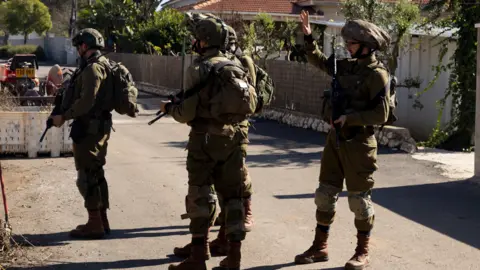
Deadly Israeli airstrikes and a mortar attack by Hezbollah have raised concerns that the fragile ceasefire between Israel and Lebanon might collapse.
On Monday night, ten people were reported killed in southern Lebanon following a series of Israeli airstrikes, the largest since the agreement to end the 13-month conflict. The Israeli military confirmed it targeted Hezbollah fighters, launchers, and infrastructure, urging Lebanese authorities to prevent further actions by the group.
Earlier, Hezbollah launched two mortars at an Israeli army base in a disputed border area, which it claimed was a warning about what it called Israel’s “repeated violations.” No casualties were reported from the mortar attack.
The US, along with France, brokered the ceasefire agreement and is overseeing its implementation. Despite the violence, the US stated that the ceasefire was largely holding.
As part of the deal, Hezbollah must remove its armed presence from the area between the Blue Line (the informal border between Israel and Lebanon) and the Litani River, roughly 30km north, within 60 days. In exchange, Israeli forces must pull out from the area, allowing Lebanese troops and UN peacekeepers to deploy.
The conflict began on October 8, 2023, when Hezbollah fired rockets into northern Israel, supporting Palestinians in Gaza following a deadly Hamas attack in southern Israel. Israel launched an air campaign and ground invasion in late September, aiming to secure the return of 60,000 displaced northern Israeli residents.
ALSO READ: Chivhayo Awards Toyota Aqua and US$20,000 to Jah Prayzah’s Team for Outstanding Performance
The Lebanese health ministry reported that more than 3,960 people, mainly civilians, were killed during the hostilities, and around one million people were displaced from areas with strong Hezbollah presence. Israeli authorities stated that over 80 soldiers and 47 civilians had died in the conflict.
On Monday night, Israeli airstrikes targeted multiple areas in southern Lebanon, including Haris, where six people were killed and two injured, and Tallousseh, where four people were killed and one injured. The Israeli military confirmed the strikes on Hezbollah infrastructure and launchers, including a mortar launcher in Berghoz that had been used to fire mortars at the disputed Mount Dov/Shebaa Farms area in the Golan Heights. No casualties were reported from the mortar fire.
Israel’s military condemned Hezbollah’s actions as a violation of the ceasefire, urging Lebanon to take responsibility for preventing further violations. Prime Minister Benjamin Netanyahu vowed to enforce the ceasefire and respond to any violations.
Hezbollah acknowledged the mortar attack, stating it was a “defensive warning” in response to Israel’s repeated violations, including targeting civilians, conducting airstrikes, and breaching Lebanese airspace.
Earlier on Monday, Lebanese officials reported two deaths in Israeli airstrikes in southern Lebanon, one in Marjaoun and another in Nabatieh. Additionally, a drone strike targeted a Lebanese army bulldozer near Hermel, injuring a soldier.


