



















Mbare’s Music Prodigy, Ngoto, Spreads Love and Music to London
For decades, the thirst for beer seemed unquenchable.
Now that consumption has stalled manufacturers must come up with new strategies for growth. Across the globe, consumers are increasingly drawn to beer that skews either to the high end or the low.
Market trends over the last five years reveal volumes shifting away from core lager products and toward premium beers and or value-based brands.
In mature markets, such as Western Europe, the United States, and Australia, tastes are trending toward premium beer.
Regionally, some breweries are building innovation capabilities into the fabric of their organization.
One company, for instance, has created a relentless focus on the premium sector in Western European markets, which has driven both the sector’s top and bottom line growth, even amid volatile market conditions.
Innovation in these markets has been such a priority that more than half of the company’s new beers in the last two years have been launched in Europe, with 30 percent of that revenue coming from premium brands.
Much of this success has come from an emphasis on local markets, where regional innovation and supply chain teams have focused on developing the agility necessary to deliver a scale innovation.
Their efforts have centered on giving wide availability and high visibility to the company’s new beers.
In one instance, a new product was available in 4,000 bars and restaurant outlets in the United Kingdom within six months.
Zimbabwe is not left out.
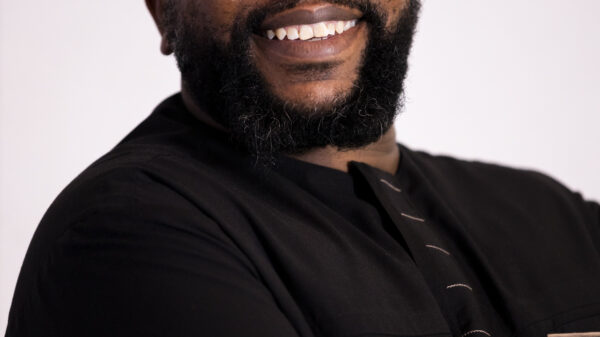
Such is the success story of a Zimbabwe-born, United Kingdom-based brewer Tafadzwa Ngoshi of the popular beer brand ‘‘Ngoto’.’
Our Lifestyle Editor Tafadzwa Zimoyo (TZ) who was recently in England caught up with Tafadzwa Ngoshi (TN) during the Zimbabwe Music Festival showcase where he has exhibiting.
Below are the excerpts from the interview:
TZ: Greetings and who is Tafadzwa Ngoshi, what childhood story to being a Chartered accountant?
TN: My name is Glen Tafadzwa Ngoshi, founder and CEO of Nhandaro Group of companies, the holding entity for Dandaro Media House, Ngoto Craft Breweries, and Hdot Clothing.
I am the fourth child of Joseph and Florah Ngoshi in a family of 6 siblings, 4 boys, and 2 girls. Our family is from Mhondoro Nyamweda, Dzumbunu, Guma. ‘Ndisu anaZuruvi tine hushe hweMhondoro.’ My wife Lynette Taremeredzwa is from Bocha and we have five kids – two boys and three girls. We are always speaking about how we are both born of royalty, so I guess we both have this innate feeling that we are born for greatness, ‘tine ropa reHumambo’.
I grew up in Mbare, Madzima Street, spending the entire day doing somersault at Number 7 grounds during the summer after the Harare City Council cuts the grass or sometimes spending days swimming along Mukuvisi river and playing with nyau dancers. I can barely recognize myself from that kid today. I went to school at Ardbennie Primary School and I was quite small but my brother Joe was my senior (Grade 6) so that made my primary school a bit of a soft landing. Initiated into Mrs Mandlazis Grade 1 Red class. Man, that lady intimidated the life out of me.
She would pinch and it was a nightmare but what saved my experience there was my dying passion for swimming. Joe taught me how to swim when I was barely 4 years old at George Hartley Council swimming pool, ‘‘kwaNowero’’. Nowero was the warden, I suspect his name was Noel, I’m sure everybody knows him from Mbare. Fast forward, I did my high school at Oriel Boys High during the tenure of Mr Maunze -the headmaster.
I used to sell poems in class, especially on Valentine’s Day. Daniel my classmate would draw hearts and cupid on letters that were sent to girls at Oriel Girls High. I sold freezits and would go to Beatrice Road to play money games. I would know whose playing in the hood, and prepare the amount of stock I need to sell, especially if we had stars coming through, like Gilbert Mushangazhike and Chamu Musanhu, it was guaranteed that my freezits would be sold out. I remember a time I tried to create my type of ice lolly using this concentrate but didn’t work.
I honestly had no clue back then that I had an interest in business, it was just that ghetto hustle or probably just trying to get some cash 50 cents pocket money on a good day. I later studied marketing by accident because I failed my accounting at the A Level. I wanted to be a chartered accountant and thank God it didn’t work out, but I found myself in the industry anyway. I worked for NMB Bank straight after school while taking myself through tertiary and had a front-row seat to the founding directors and their amazing operation. I admired what success looked like for them, real-time banking pioneers in my opinion.
Truly one of my key foundations because that allowed me to dream and search for more.
TZ: How then did the Ngoto come about?
TN: Ngoto Craft is an alcoholic beverage. We have a range that comprises a beer, our flagship product that we have been working on it since 2018, and finally launched on September 25, 2020, just before Covid-19 pandemic. We also have a gin and a vodka, a brandy too. All our products are quite popular, if I had to pick, I would say I have a bias for the beer, so it does get special attention. It’s our most popular creation, and that beer has just managed to carve its path. It has this magical personality.
When we created the beer, it represented so much locally as it was a footprint of Zimbabwe everywhere I would go. You know when you go to other countries, you have this need to belong, so identity becomes that feeling that tops many others. I remember being on the rooftop of a hotel I was staying at in March of 2018 in Nairobi watching the sunset with a burning desire of missing home, Lyn, and the kids. It felt heavy.
It was just me and a pint of beer. All the gallivanting I was doing, I subconsciously set out on a beer tourism journey, making mental notes of all the beers I knew in each location. I didn’t know that then but thinking of it now, that was the inception of Ngoto Premium Craft Lager, ‘‘Native Urban Brew’’ — “The Taste of Freedom”. It was an identity thing for me, that thing that people would interact with and say, this is a taste of Africa, from Zimbabwe. An export of “us to them”. I wasn’t sure what I was onto.
Apart from an imaginary experience, one that was soaked in the pain of traveling and always being away from home. Getting stuck in an identity crisis I’m a Zimbabwean who’s resident in South Africa but falling in love with Africa where I also felt at home, it had to be home right? I started building the idea for the hardest pitch (convincing Lyn about this insane fantasy).
TZ: What then inspired the brand name Ngoto?
TN: So now the idea of a beer is alive, no name beer. We would always talk with my wife about controlling the means of production and owning our fate. It was simple, we just had to work harder, just do something to change the direction of the wind into our sails. “The price is high, but the budget is low.” We had no clue what we would call this beer, it had to be simple, it had to say something about home. So, both my wife and I had clear memories of how people would be summoned to the latest brew in rural areas. Someone would announce standing in a tree or an ant hill, a large boulder, anything high. They would shout “kwaita Ngoto, or kwaita hwahwa “. Ngoto was that calabash or clay pot with a traditional brew in it. The decision was unanimous, Ngoto became an unborn child with a name. Not only a name but a personality that people would fall in love with but at this point a figment of our imagination.
The journey started, research after research and knocking on doors I became obsessed with just bringing this idea to life. We wanted the name to be a Zimbabwean export, an export of language, culture, taste, heritage, and lifestyle. Not to forget that Ngoshi and Ngoto have a nice ring to them. My home gift, homage. Staying connected to Mhondoro where we come from.
TZ: Where is it processed and how has the brand grown?
TN: We are currently brewing in South Africa and England with a project in the works to brew locally. Our brand is still new to South Africa, we have taken our time in allowing the brand to grow, we have quite a decent-sized market, not only Zimbabweans, just beer enthusiasts across various demography. Jack Fridays and Senor Jack are our leading retail partners, they are based in Pretoria. We also have gone to market via themed events, which we have done not only in SA, but Zimbabwe as well. In Zimbabwe, we have partnered with several wholesalers and retailers. We are increasing retail points so you will be getting more access to Ngoto craft beer and spirits. Again, another passion was introduced to the family.
TZ: Who is your role model and why?
TN: I haven’t thought about an actual person. My motivation comes from wanting to leave a mark, a legacy. The power to change our fortunes and along with that, those of others. I do admire how Dana White has grown the UFC brand, how they market the business, and how they dared to be the first organisation to offer live events during Covid-19. The UFC comes top of mind when I think of an organisation that has managed to create women stars that can headline an entire fight night on par with male fighters.
Lewis Hamilton, Israel Adesanya, Anthony Joshua, Derick Chisora, maybe not role models, but people I resonate with, their stories, and achievements. Sun Tzu also makes up a solid case in how my mind approaches life, I’m an avid consumer of his teachings and Khalil Gibran too.
TZ: Now in the UK, how do you plan to expand the brand?
TN: In the UK, we launched in 2021, it was a demanding step, but it just did not make sense for us to not launch in the UK. We have our biggest population of Zimbabweans outside of Zimbabwe in the UK and various other parts of Europe. Our most recent partnership with ZimFest Live catapulted our brand visibility and access as it opened an opportunity to reach the masses.
I must applaud Takura who’s our Europe director, he has been able to craft meaningful relationships with other leading Zimbabwean brands in the UK. Ngoto has grown into Europe. Having that kind of footprint has been a dream for us. South Africa, Zimbabwe, and the UK in three years. Surviving Covid-19 was an award-winning achievement considering the losses we experienced. We built from the ground up again with market and family support, it has become possible to grow from elevation to elevation.
TZ: What are some of the challenges then you are facing in your line of work?
TN: My late friend Collett would say, “Access to capital”. Entrepreneurship is not for everybody, I wish we could introduce the mentality of entrepreneurship in the early stages of childhood education. To start a business and have the capacity to reach a profit point requires a financial investment that’s a plague to your life before it gives a lifetime of provision if you get it right.
Financial Institutions need good credit and a perfect resume plus your DNA test to fund you, if they do, by the time you have made your countless losses, you will be indebted for a long time. Investors will always just look at profits, fair enough. To make an impact in the market, you need scale and scale needs financial muscle. We have had to fund ourselves and have gatekeepers that do not embrace new additions in the market, but these are artificial issues.
I wish there were specific programs to support diaspora businesses investing back in the country with reasonable tax pardons for importing production equipment, and learning programs that induct you on how to make use of existing Government business and Economic infrastructures that support the SME.
TZ: But why did you decide to venture into beer and do you drink, hence does it not infringe your business model?
TN: Dare to be great right? Somebody’s got to do it. To whom much is given, much is required. I guess all it was is reaching for that something that you could have never dreamt of. Alcohol just suited our naming convention for our registered businesses, we trade as Dandaro Media House in South Africa and Nhandaro Group of companies in Zimbabwe and England. Names that come from “kutandara”, chilling, hanging out. Alcohol and chilling, what more can I say to you?
Yes, I do drink. The gift has become the curse. On occasion I do prefer our drinks, I’m infatuated with the different personalities of products. They are like siblings. I enjoy watching people experience our products, my happiness comes from there. I have seen many sides of alcohol when you abuse it when it elevates a celebration when it’s used in libation. I’m having a drink right this moment, writing this while away from home again, been awake for close to 21 hrs now.
‘‘Ini neNgoto, pahushamwari hwedu, tega tega hedu’’. You can’t put a price on that. I guess the answer is no there’s no infringement.
Source| Herald


